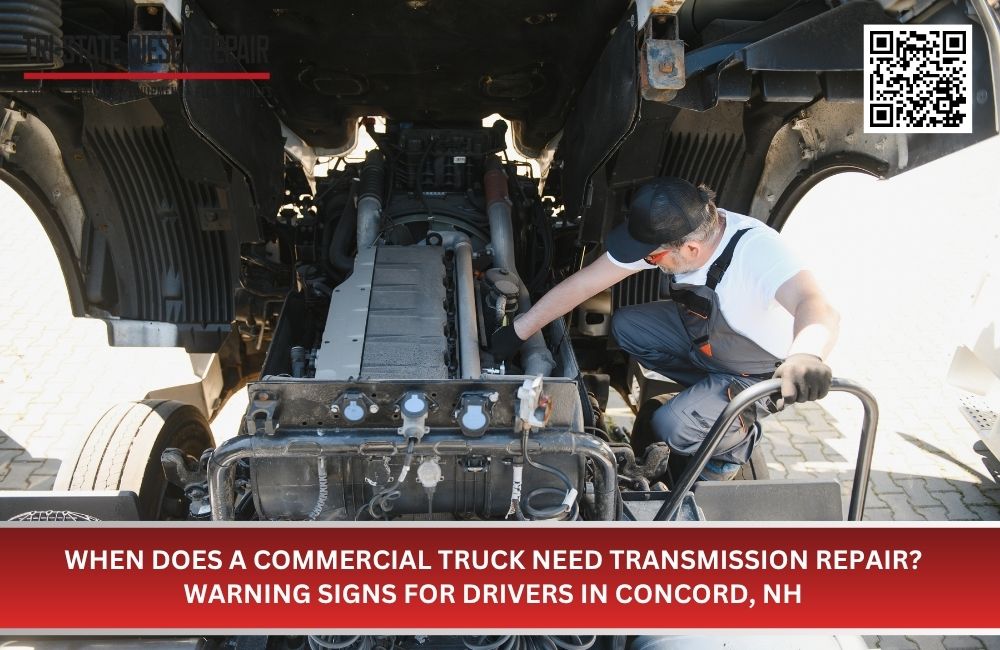
When Does a Commercial Truck Need Transmission Repair? Warning Signs for Drivers in Concord, NH
A commercial truck rarely develops a major transmission problem without showing some change in performance first. Hard shifting, delayed gear engagement, unusual noises, slipping, or unexpected changes in engine speed can indicate that something is wrong. For drivers operating around Concord and Central New Hampshire, recognizing these symptoms early can make the difference between scheduled Truck Repair and an expensive breakdown during a delivery or passenger trip.
Transmission problems affect more than semi-trucks. Medium-duty delivery vehicles, commercial buses, diesel-powered RVs, and vocational trucks also depend on reliable power transfer. Although different transmissions behave differently, changes in normal operation deserve attention before they lead to additional mechanical damage.
When Does a Commercial Truck Need Transmission Repair?
A commercial truck may need transmission repair when shifting becomes difficult, gears slip, engagement is delayed, unusual noises develop, or transmission temperatures repeatedly exceed normal operating limits.
These symptoms do not always mean the transmission needs rebuilding. Problems involving fluid condition, electronic controls, clutch adjustment, sensors, wiring, or driveline components can produce similar behavior.
The purpose of professional diagnosis is to identify the cause before deciding whether the vehicle needs an adjustment, component replacement, or major repair.
A qualified Diesel Mechanic Belmont NH can evaluate transmission behavior alongside engine performance and related drivetrain systems.
Why Hard Shifting Should Never Be Considered Normal
Commercial transmissions are designed to handle demanding workloads, but shifting should remain reasonably consistent with the vehicle's design and operating conditions.
Manual Transmission Shifting Problems
In a manual transmission, difficulty selecting gears may result from clutch adjustment problems, worn linkage, damaged synchronizing components where fitted, or internal transmission wear.
Some heavy-duty nonsynchronized transmissions also require proper driver technique. Grinding caused by incorrect shifting should be distinguished from a developing mechanical fault.
If the transmission becomes increasingly difficult to shift despite correct operation, inspection is appropriate.
Automated and Automatic Transmission Problems
Automated manual transmissions and conventional automatic transmissions use different mechanisms to control gear changes.
Harsh engagement, unexpected shifting, hesitation, or failure to select a gear may involve electronic controls, actuators, hydraulic pressure, or internal components.
A professional Truck Repair Shop should identify the transmission type before recommending repairs.
What Does Transmission Slipping Feel Like?
Transmission slipping generally occurs when engine speed increases without a corresponding increase in vehicle speed.
In an automatic transmission, this may indicate problems involving hydraulic pressure, clutch packs, fluid condition, or internal wear.
In a manual transmission, a worn or improperly operating clutch may produce similar symptoms.
Drivers may notice slipping most clearly while accelerating, climbing a grade, or pulling a loaded trailer.
When searching for Diesel Truck Repair Near Me, explain whether the engine revs higher than expected, whether acceleration feels weak, and whether the problem becomes worse under load.
These observations can help separate transmission concerns from engine power-loss problems.
Delayed Gear Engagement Can Signal Developing Damage
A truck that hesitates before moving after selecting a driving gear may have an engagement problem.
The cause depends on the transmission design.
Low hydraulic pressure, fluid problems, actuator faults, clutch concerns, or electronic control issues may contribute.
Repeated delays should not be ignored, particularly when the truck is carrying heavy loads or operating in traffic.
For businesses seeking Commercial Truck Repair Belmont, early evaluation can help prevent an intermittent engagement problem from becoming a complete loss of drive.
Unusual Transmission Noises Deserve Attention
Mechanical components often produce recognizable sounds when wear develops.
Whining, grinding, rattling, humming, or clunking may originate from the transmission, clutch assembly, bearings, driveshaft, or differential.
Noise That Changes With Gear Selection
A sound that appears only in certain gears may provide useful diagnostic information.
For example, noise during a particular gear range could indicate wear involving specific internal components.
However, sound alone cannot confirm which part has failed.
Noise During Clutch Operation
A sound that changes when the clutch pedal is pressed or released may involve release bearings, pilot bearings, clutch components, or transmission input-related parts.
A complete Diesel repair evaluation should consider these connected components before the transmission is removed.
Transmission Fluid Problems Can Lead to Expensive Repairs
Transmission fluid performs different functions depending on the transmission type.
It may lubricate gears and bearings, transfer hydraulic pressure, remove heat, or support clutch operation.
Incorrect fluid specifications, contamination, leaks, or inadequate fluid levels can affect performance.
What Does Burnt Transmission Fluid Mean?
A burnt odor may indicate excessive heat or fluid deterioration, particularly in transmissions that use hydraulic clutch systems.
Discoloration, metal debris, or contamination may also suggest internal wear.
However, fluid appearance alone is not a reliable diagnosis. Some transmission fluids naturally darken during service.
Technicians should evaluate fluid condition alongside operating symptoms, maintenance history, and manufacturer specifications.
Overheating Can Damage a Commercial Transmission
Commercial transmissions generate heat during operation, especially when towing, hauling, or working through demanding terrain.
Excessive temperature can accelerate fluid deterioration and damage internal components.
A truck may display a transmission temperature warning, change shifting behavior, or enter a protective operating mode.
Drivers looking for Heavy Duty Truck Repair Near Me should take repeated transmission overheating seriously rather than assuming the warning is caused only by heavy hauling.
Cooling problems, slipping components, excessive load, or inadequate lubrication may require investigation.
Can a Faulty Sensor Cause Transmission Problems?
Yes. Modern automatic and automated transmissions depend on electronic information to control shifting and engagement.
Speed sensors, position sensors, wiring, control modules, and actuators can affect transmission operation.
An electrical fault may produce harsh shifting or prevent the transmission from selecting a gear even when the internal mechanical components are functional.
A professional Truck Repair Shop near me should use appropriate diagnostic equipment to distinguish electronic faults from mechanical failures.
Replacing internal transmission components without confirming the cause can result in unnecessary expenses.
Why Transmission Problems Become Worse Under Heavy Loads
A loaded commercial truck places greater demand on the entire drivetrain.
Climbing hills, accelerating with cargo, or towing a heavy trailer increases the torque that must pass through the clutch and transmission.
A component that performs adequately during light operation may begin slipping, vibrating, or overheating under these conditions.
Drivers around Concord, Belmont, and nearby Central New Hampshire communities should pay attention when symptoms appear only with a loaded vehicle.
The difference between empty and loaded operation can be an important diagnostic clue.
How Can Drivers Tell Whether the Clutch or Transmission Is Failing?
Clutch and transmission problems can overlap, but their symptoms may provide useful clues.
A slipping clutch may allow engine speed to increase without normal acceleration.
Clutch drag may make gear selection difficult because the clutch does not disengage completely.
Transmission problems may produce gear-specific noises, engagement failures, or abnormal shifting even when the clutch operates correctly.
A technician experienced in Truck Repair Belmont NH can evaluate clutch operation, adjustment, linkage, and transmission performance before recommending major repairs.
What About Transmission Problems in Commercial Buses and RVs?
Commercial buses and diesel-powered motorhomes frequently use automatic transmissions designed for substantial vehicle weight.
These vehicles may experience delayed engagement, harsh shifting, overheating, or unusual vibration when problems develop.
Passenger-carrying vehicles require particular attention because unexpected loss of drive can affect schedules and passenger safety.
RV owners should also consider long storage periods, fluid condition, vehicle age, and towing demands.
A Truck Repair Shop Nearby that services commercial drivetrains may be able to evaluate these concerns, although owners should confirm that the facility supports their specific transmission model.
Can a Truck Keep Driving With Transmission Problems?
The answer depends on the severity of the symptoms.
A minor change in shifting may allow time for a scheduled inspection, but slipping, grinding, repeated overheating, sudden loss of drive, or severe vibration can indicate a more urgent problem.
Continuing to operate a damaged transmission may increase internal wear and create additional drivetrain damage.
If the truck cannot engage a gear reliably or maintain safe movement, it should not continue its route.
Drivers may need Truck Roadside Assistance when a transmission failure leaves the vehicle disabled.
For operators traveling between Concord and Belmont, Roadside Truck Repair Belmont services may help assess the vehicle and determine whether towing or additional shop work is necessary.
Can Mobile Truck Repair Help With Transmission Problems?
Some transmission-related concerns can be evaluated outside a repair facility.
Mobile Truck Repair may be appropriate for initial diagnostics, accessible electrical faults, external leaks, certain linkage problems, and other serviceable components.
A Mobile Diesel Mechanic NH may be able to retrieve diagnostic information and identify whether the problem requires specialized shop equipment.
However, internal transmission repairs, major clutch replacement, and complete rebuilds generally require controlled working conditions and appropriate lifting equipment.
Businesses using Mobile Truck Repair Belmont should describe the symptoms and vehicle condition when requesting service so the provider can determine whether on-site work is practical.
How Does Preventive Maintenance Protect the Transmission?
Transmission maintenance should follow manufacturer recommendations and account for the vehicle's operating conditions.
A truck that regularly carries heavy loads, operates in stop-and-go traffic, or spends significant time on grades may experience different wear patterns from a highway vehicle.
A dependable Fleet Maintenance program should include attention to fluid service, leaks, cooling performance, clutch operation, driveline condition, and abnormal shifting.
Why Service Records Matter
Documenting transmission concerns helps identify problems that develop gradually.
A driver may report occasional hesitation one month and more frequent shifting problems later.
When these observations are recorded, technicians can evaluate whether the symptoms are becoming more severe.
For operators investing in Fleet Maintenance Belmont NH, maintenance history also helps determine whether repeated problems involve operating conditions, service intervals, or underlying mechanical defects.
How New Hampshire Driving Conditions Affect Transmission Wear
Central New Hampshire presents several operating challenges for commercial vehicles.
Cold starts, winter roads, frequent stopping, steep grades, and seasonal hauling demands can increase drivetrain stress.
Cold Weather and Transmission Operation
Low temperatures can affect fluid viscosity and temporarily change transmission behavior until the system reaches its intended operating temperature.
However, severe shifting problems or persistent engagement delays should not be dismissed as normal winter behavior.
Stop-and-Go Driving Around Concord
Commercial vehicles making deliveries throughout Concord may experience frequent gear changes and repeated acceleration.
Depending on transmission design, this operating pattern can increase clutch cycling, heat generation, and wear.
Maintenance planning should reflect how the truck is used rather than relying exclusively on mileage.
When Should Fleet Owners Schedule a Transmission Inspection?
An inspection is appropriate when a driver reports recurring shifting problems, unusual noises, slipping, temperature warnings, fluid leaks, or unexpected changes in performance.
Fleet managers should also investigate repeated transmission-related diagnostic codes.
Early evaluation may reveal a repairable external problem before internal damage develops.
For operators comparing Commercial Truck Repair Belmont services, choosing a provider familiar with commercial transmissions and related drivetrain systems can help improve diagnostic accuracy.
What Should You Tell the Repair Shop?
Clear information can shorten the troubleshooting process.
Explain whether the vehicle has a manual, automatic, or automated manual transmission.
Describe when the problem occurs, whether the truck is loaded, which gears are affected, and whether warning messages appear.
Recent repairs, fluid service, and changes in operating conditions may also be relevant.
Drivers searching for 24/7 Truck Repair Belmont NH during an unexpected breakdown should confirm emergency service availability and explain whether the truck can move safely.
Accurate information helps the provider recommend an appropriate response.
Address Transmission Warning Signs Before They Become Major Repairs
Commercial truck transmission problems often begin with changes that drivers notice during normal operation. Delayed engagement, slipping, hard shifting, unusual sounds, fluid leaks, and overheating all deserve attention.
Recognizing these symptoms early can help owners avoid unnecessary damage, reduce downtime, and make better repair decisions.
For drivers and fleet operators throughout Concord and Central New Hampshire, transmission reliability depends on proper operation, manufacturer-recommended maintenance, and timely diagnostics.
Tri-State Diesel Repair provides Truck Repair, transmission and clutch service, drivetrain diagnostics, preventive maintenance, and mobile support for eligible commercial vehicles from its Belmont, NH location. Contact the team to discuss shifting concerns, schedule an inspection, or check service availability before a developing problem interrupts your next route.
Tri-State Diesel Repair
147 Mile Hill Rd, Belmont, NH 03220
Phone: +1 (603) 819-5359
